
Race, Colorism, and the Making of Identity
The Color PurpleThis thread traces racial hierarchy across the American South and Africa, showing how color, cultural judgment, and colonial power shape identity.
increasing Bearing strength in each event
 decreasing
Bearing strength in each eventdecreasingBlack Life Under White Power

Black Life Under White Power
Unequal Protection
Celie's family lives within a society where white authorities control commerce, policing, and public life. Black women have little protection against either domestic violence or racial violence.
The events around Celie's father and Sofia show different forms of a system that punishes Black independence.
A Larger Pattern
Celie's personal experience is connected to the histories Nettie later learns about and describes. Racism is not a background detail; it shapes property, family security, and who is believed.
The novel links intimate harm to structures that exceed any one household.
The White Missionary Image

The White Missionary Image
Representation and Authority
Nettie sees missionary institutions filled with images of white explorers and religious figures. The visual world implies that knowledge, civilization, and spiritual authority belong to white people.
She recognizes how pictures can shape belief even when written language offers different evidence.
Learning to Question
Nettie's education reveals African histories that her early teachers did not provide. She begins to question the assumption that Africa is simply backward or awaiting rescue.
The conflict concerns who gets to describe a people and whose account becomes official.
Color and Public Beauty
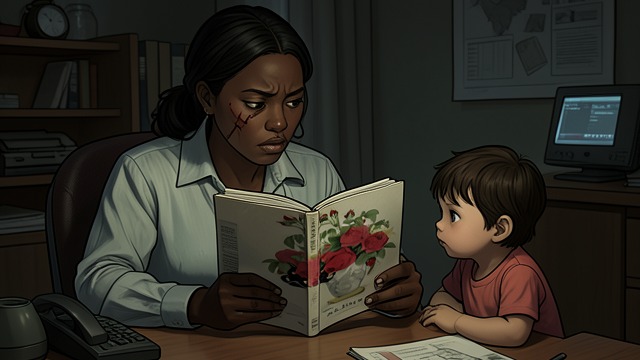
Color and Public Beauty
Fear of Rejection
Tashi fears that Americans will judge her scars and that Black communities may prefer lighter skin and altered hair. Her understanding comes partly from magazines and the images they circulate.
Her anxiety shows that racial pressure can be reproduced within communities as well as imposed from outside.
Love and Visibility
Adam's decision to share her scars challenges the expectation that Tashi must hide her history to be loved. His support does not remove the risks of prejudice, but it refuses to make her bear them alone.
The relationship gives identity a form rooted in solidarity rather than conformity.
A Black Woman in the Back Seat

A Black Woman in the Back Seat
Segregation Made Ordinary
Sofia must move from the front seat to the back of Miss Millie's car because racial custom forbids them to sit as equals. The rule appears in a private ride, not only in public institutions.
Miss Millie's inability to reverse the car then consumes much of Sofia's visit with her children.
The Cost of Politeness
Millie later calls Sofia ungrateful, failing to recognize how the racial order has structured the visit. A gesture of kindness can still preserve the giver's control over another person's time.
The episode makes segregation visible through an ordinary journey.
A Family's July Gathering
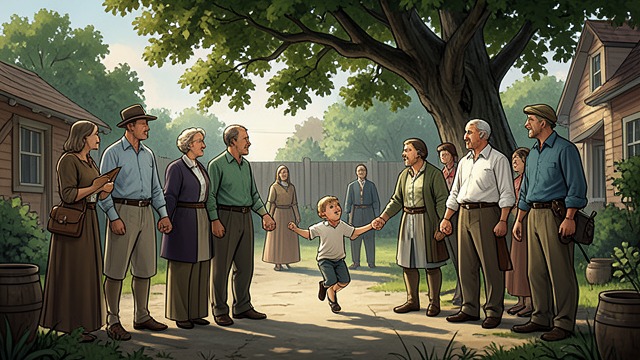
A Family's July Gathering
Shared Celebration
The reunited family gathers on a day when Black people have time away from work. Harpo notes that the holiday allows them to celebrate one another.
The gathering places family care against the national story of liberty, recalling how freedom has been unevenly distributed.
Multiple Histories Together
The group includes people shaped by the American South, Africa, migration, racial violence, and cultural difference. They make room for one another without requiring a single shared experience.
The celebration offers a modest vision of belonging grounded in mutual recognition.
During Celie's childhood and early adulthood
During Nettie's journey through England
When Tashi considers moving to the United States
During Sofia's short visit home
At the final reunion on American Independence Day
